








Slip Ring | 66 circuits | SVTS C 11-U-A-18/48
Maximum central clearance for large-axis rotating architectures
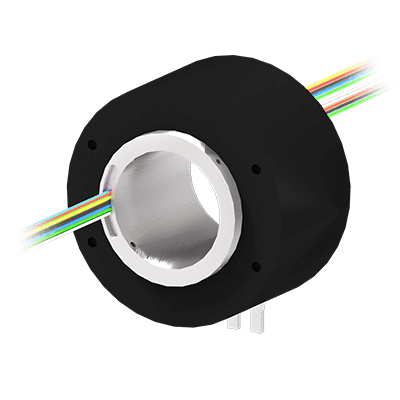
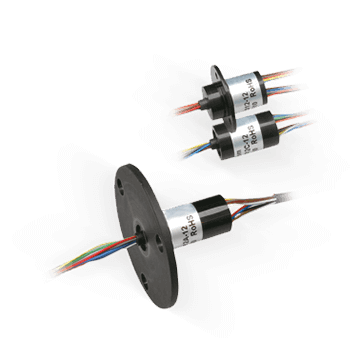
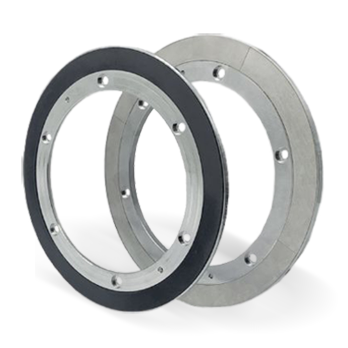
The SVTS C11 is a through-bore slip ring designed to transmit a large number of power and signal circuits through a continuously rotating axis. Its large 100 mm through-bore allows a shaft, cables or other mechanical elements to pass through the centre of the slip ring, with an outer diameter of 203 mm.
Depending on configuration, the SVTS C11 can combine 20 A power circuits and 5 A signal circuits. The standard range provides up to 48 power circuits rated at 20 A or up to 80 signal circuits rated at 5 A, as well as numerous intermediate combinations to meet the electrical requirements of the machine.
Its multipoint contact technology provides multiple contact points between brushes and rings to maintain low electrical contact resistance, reduce electrical noise and limit contact wear. No lubrication is required.
Thanks to its 100 mm through-bore and high electrical capacity, the SVTS C11 is particularly suitable for large rotary tables, indexing systems, automated machinery and industrial equipment requiring numerous power and signal connections while maintaining a substantial central passage.
Advantages
- Large 100 mm through-bore
- 203 mm outer diameter
- Up to 80 circuits depending on configuration
- 20 A power circuits
- 5 A signal circuits
- Up to 48 power circuits or 80 signal circuits
- Wide range of combined power and signal configurations
- Multipoint contact technology
- Low electrical contact resistance and low electrical noise
- Reduced wear and lubrication-free operation
- Compliant to CE and RoHS
Benefits
- Maintains a 100 mm central passage for the largest shafts and through-assemblies in the standard range
- Allows up to 80 electrical circuits to be transmitted around a very large mechanical axis
- Meets the needs of architectures where preserving maximum central clearance is the main requirement without separating electrical transmission
- Allows power and signals to be integrated directly around mechanical elements that smaller-bore slip rings could not accommodate